Physical Media vs Digital Media: A Performative Generational Shift or the New Status Quo?
1st April 2026
Back to articlesPhysical Media vs Digital Media: A Performative Generational Shift or the New Status Quo?
BY ELLIE PATERSON, DIGITAL MEDIA EXECUTIVE
Creativity has never felt so fragile, with its future threatened by AI. We have access to more artistic outpouring than ever before, yet we feel like we’re drowning in unimaginative slop.
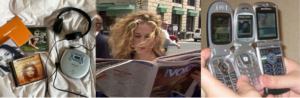
Meanwhile physical media (from magazines, newspapers, books, and vinyl to iPods, CDs and DVDs) remind us of a simpler artistic time. The term ‘touching grass’ is now TikTok shorthand for reconnecting with nature & disconnecting from our phones. The rise in popularity of physical media is an extension of that.
And I couldn’t help but wonder: was it all for show?
Three trends seem to be pushing the physical media resurgence:
- A desire for ownership
Digital media gives us access to everything, but ownership of nothing. Physical media restores that sense of permanence.
You wouldn’t buy a vinyl record and throw it away after listening to one song, you indulge in it and cherish it forever. In contrast, Spotify feels like too much of a good thing: when you have access to any song, why listen to just one album?
- Fear about our attention spans
The refusal to be bored creates the perfect environment for infinite, brain-rot consumption. BAM! It’s been three hours of doomscrolling TikToks and Reels. We know it’s bad for us, but we find it hard to stop. We want to read magazines and do physical hobbies to factory reset our minds.
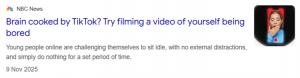
Things are so bad that tech companies like Brick are now stepping in to help us stop looking at our phones. It seems we are incapable of limiting our own screen time of our own free will.
- A desire for real-life connection as third spaces dwindle
The opportunity for us to connect ‘IRL’ is dwindling, but we instinctively need human interaction.
Physical media and offline hobbies are the hook to bring people back together. Zine writing, pottery classes and wreath making are all gaining popularity as remedies for digital addiction & loneliness.
Hollow intent or real behaviour change?
In an era of performative authenticity, it’s hard to decipher whether ‘touching grass’ is genuine or another aesthetic trend.
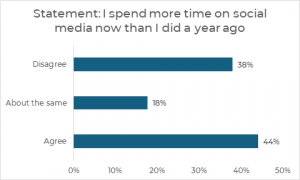
Gen Z survey Data, YouGov, 2026
The data shows Gen Z are spending more time on social not less and that 43% of them report spending between three and six hours per day on their screens.
There IS a desire to limit our digital consumption, but little behaviour change to match it.
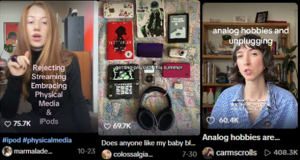
The hypocrisy of the trend is seen in the always-changing ‘cool-girl’ aesthetic, which pressures young women to show up in very specific ways online. If people were truly concerned about their screen time, they wouldn’t show us how detached they are from their phones from their phones.
What does it mean for marketers?
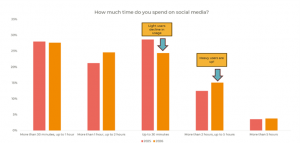
Light users are in decline, heavy users are on the up! All Adults survey Data, YouGov, 2025, 2026
The data shows that audiences are still very much present online, so reach isn’t a problem.
However, there is an opportunity to tap into the growing desire for real-life connection and physical experiences. From Tunnocks’ partnering with Uniqlo , to Rolex opening a watchmaking University; many brands are thinking about how ‘IRL’ culture can become part of brand storytelling.
Lush famously stepped away from social media altogether. Other brands may choose to encourage offline moments or place themselves in environments that feel less like brain-rot content streams.
So, would the motion for physical media replacing digital media hold up in court? No, but the desire for a more offline space is very much there. Brands should be thinking more about how they can be more physically present & connect with their audiences in a more authentic way.